Showing posts with label pasta. Show all posts

Saturday, September 01, 2007

A PINCH AND A PUNCH FOR THE FIRST OF THE MONTH, AND NO RETURNS.

Last week Mark at The Book Depository was offering ten bloggers books to review, and I was fortunate enough to be one of the ten. I haven't received the book yet, but of course,when I do I will post my views here too . Head over to the Book Depository because Mark is going to be making other offers over the next weeks, and there is nothing a reader likes better than to get their hands on a new book

READING:

I’ve only ever read one novel by Douglas Kennedy and wasn’t that impressed but so many people told me that they had really enjoyed his books that I felt I should try another, so I picked up his most recently published work The Woman in the Fifth,

Narrated by Harry Ricks, a Professor of Film Studies at a Midwestern college who has just lost his wife, daughter, job and money, it all takes place in Paris. In fact the book could have just as easily been entitled ‘Naïve American Down and Out in Paris’. Harry arrives in the city in the bleak days after Christmas, running away from the scandal caused by his affair with a student – something that is totally taboo in the politically correct USA, and when he arrives in France he continues to make really bad decisions. Within hours of his arrival a chain of unfortunate events begins and he is left with little money to fulfil his original plan of going to the cinema as often as possible whilst writing a novel based on his angst ridden childhood. He stumbles from one disastrous situation to another, renting a disgusting chambre de bonne in a houseful of immigrants in the quartier du Turc, and taking an illegal job as a night-watchman, working for shady employers who do not permit him to know what they are doing, but whatever it is is almost certainly criminal. Every euro he earns has to be carefully eked out, and the reader gets to know the detailed economics of his situation--- 38 euros for the treatment of a STD he has picked up, and then 2 euros for a packet of condoms (which he never uses) not to mention the costs of croissants, coffees, the weight of the fish , cheese and fruit he buys at the market etc.

At a salon held by another American ex-pat, he meets Margit Kadar, a sultry, mysterious Hungarian in her early fifties, with whom he embarks on a passionate affair -the raunchy sex scenes leaving little to the imagination. From the start Margit is in charge, and she will only see him at her apartment in the 5th arrondissement at exactly 5pm twice a week.. Once Harry has met Margit, strange things begin to happen. Anyone who has ever treated him badly gets their comeuppance in a series of apparent accidents, dead bodies pile up and Harry is detained by the Police on several occasions. His life becomes threatened, and dangers swirl round him as he manages to antagonise a Turkish bar-owner, his nefarious employers, and his extremely nasty landlord in turn.

The plot becomes more and more surreal and Kafkaesqe; is Margit meant to be his avenging guardian angel? or a succubus who will not let him go?

I read right to the end of the book, hoping the author would eventually make sense of it all, but alas no such luck. The question I was left wondering is: Can you have sex with a ghost? I don't think so.

Rated 2*


RANTING:

Year in, year out, millions of us pay our premiums to insurance companies trusting that when and if trouble comes our way we will be covered financially. But all too often these days we hear that the insurance companies try their best to weasel out of paying the monies owed. Yesterday I heard of a case that made my blood boil.

A 29 year old married woman, mother of a two year old daughter, was killed when a suicidal motorist deliberately crashed into their family car. Her distraught husband, an electrician, now a loan parent, tried to make a claim for the death of his wife against their joint life insurance policy with Legal & General. After all, he was going to need to pay for child care amongst other things. To his surprise and distress, L&G refused to pay up, stating that his wife had withheld important information from them. What could that be?

The couple took out the insurance policy when she was pregnant with their daughter. She had given up smoking to become pregnant, and was no longer a smoker. So, on the insurance application form when they asked if she had smoked in the past 12 months, she answered, truthfully, ‘no’. Her husband who was still smoking at the time answered ‘yes’.

After her death L & G obtained her health records from the maternity unit and noted that someone had ticked the box marked ‘smoker’. Who knows what that meant - was it in the context that she had previously been a smoker? Did she know that whoever it was had ticked the box, so she could have refuted it?

So when she died in a car crash caused by a stranger, L& G refused to pay out. Because, they claimed, she was a smoker.

What kind of cheap trick is that? Smoking didn’t have anything to do with her death; it is morally reprehensible that they behaved like this, forcing her husband to go to court, and then at the last minute – 2½ years later- offering an out of court settlement of £100,000. I wonder what Tim Breedon, CEO of Legal & General, would think of such shoddy, despicable behaviour if he were the grieving husband.

The moral of the story is that Insurance companies will happily take your money for years, but they won’t pay out if they can possibly help it. B**tards.


RECIPE:

As I may have said, Monday night is always pasta night chez nous - I can hear my everloving first-born saying “for god’s sake Mum, you’re beginning to repeat yourself” - but we do eat pasta on other nights too, if the fancy takes me. Recently I made this for a Friday evening, and jolly good it was too.

SUPER SALMON PASTA
Serves four

4 skinless salmon fillets
4 Tablespoons Noilly Prat (or other dry Vermouth)

4 Tablespoons crème fraiche
6 Spring onions, finely chopped

1 Tablespoon chopped Dill
1 Tablespoon chopped Parsley
Sunflower oil for frying
Salt & Pepper

500 g pasta of your choice – farfalle, fusilli, penne or similar.

Put a pan of water to boil for the pasta. When boiling cook the pasta in the usual way.

Heat a splash of oil in a frying pan – just enough to stop the salmon from sticking – and when hot, place the salmon fillets to fry gently for about 2-3 minutes before turning them over and cooking the other side; it doesn’t matter if they go slightly brown, but try to keep them as lightly coloured as possible. Then add the spring onions and the Noilly Prat which will bubble up. With a wooden fork break the cooked salmon into large flakes, add the chopped dill and parsley and the crème fraiche. Cook for a few more minutes stirring gently so the NP, crème fraiche and herbs make a sauce.

Drain the cooked pasta, leaving a small amount of the cooking water in the pan, stir the salmon mixture through it and serve with extra parsley sprinkled on top if you want to garnish it.


Wednesday, April 18, 2007

SMILE FIRST THING IN THE MORNING. GET IT OVER WITH.
W.C.Fields


READING:

In his first bestselling memoir ‘Mukiwa: a white boy in Africa’ Peter Godwin described his childhood in Zimbabwe – or as it was then called, Southern Rhodesia – how he served as a conscript in the Rhodesian army and how he came to espouse the cause of a free, multi-racial, democratic state which came into being with ZANU winning the first open elections and Mugabe becoming Prime Minister. When a Crocodile eats the Sun is his second book of memoirs. The title, which may perplex people, is an African expression for a solar eclipse. Solar eclipses are thought to be very bad omens, and only occur when men have displeased the sun.

Godwin, who now lives with his wife and children in New York, returned to Zim when his father had a major heart attack (which he survived); and like many adult children of ageing parents, started to cope with the challenges of supporting and caring for them - always a tricky task - and made impossibly difficult by his parent’s refusal to leave the country they loved and considered their home.

Godwin’s parents, like my own, went to Central Africa in the immediate aftermath of World War II. They took with them skills, enthusiasm and determination to help their new countries grow and prosper. His mother was a doctor, and his father an engineer. Together they invested their lives in the country, raised a family there and were totally committed to making the new nation as successful as it could be. How hollow and tragic it all seems when they are left impoverished and in failing health. I found the book immensely moving, the writing often evoked my own memories so vividly that I had to stop reading. I was choked with feelings of rage and impotence that nobody in the West has tried to stop this awful madman Mugabe wreaking such havoc. To quote Godwin: "I feel like weeping. Weeping at the way Africa does this to you. Just as you're about to dismiss it and walk away, it delivers something so unexpected, so tender. One minute you're scared shitless, the next you're choked with affection."

The complete collapse of law and order, the land grabs, forcible evictions from farms so that they can be handed over to Mugabe’s cronies as political rewards, the shattered economy and the government fomented violence towards any who attempt to challenge Mugabe’s rule are vividly documented. Over two million Zimbabweans have fled, in the main the black middle classes, and who can blame them, indeed Peter Godwin’s mother is still managing a medical clinic well into her seventies because there are so few doctors left in the country.

What makes this book so much more than just a record of the willful destruction of a once prospering nation, is the personal story of Godwin’s father. To his amazement he and his sister discover that far from being the quintessential English colonial, his father is actually a Polish Jew whose mother and sister died in Treblinka, and who only escaped the same fate because he had been sent to England on a language course just before the Nazi invasion of Poland. The book begins and ends with Godwin preparing wood for the funeral pyre to cremate his father’s body. His father had particularly requested cremation, but in the chaotic and violent shambles that Zimbabwe has become, there was no fuel available to keep the single crematorium operating. To fulfill his father’s wishes, Godwin had to persuade the local Hindu temple to let him have a funeral pyre.

For anyone who is interested in Africa and its people this book is a must.
5*


RANTING:

Arghhh….if I hear the word “issues” coming out of one more person’s mouth on TV, radio or anywhere else, I will go stark raving bonkers. Gender issues, race issues, identity issues, religious issues, political issues, educational issues, witness protection issues, and on and on and on.

The word has lost all original meaning and everyone in public life, and I do mean EVERYONE, seems to toss it around as though it makes whatever they are banging on about relevant and serious. In ten minutes of the Today programme on BBC Radio 4 this morning I must have heard the word used a dozen times by different people. Then I started reading notes made by someone in the Metropolitan Police Service for a talk given to London Youth Magistrates and came across this bullet point which illustrates exactly what is getting me so aerated:

“Development of Diversity Issues relating to Gun, Gang and Weapon Issues.

What PRECISELY does that mean? Answers on a postcard please.

I have issues with “issues” …or should that be “ishoos”.
From hence forth, this blog will be an “issues” free zone.


RECIPE:

As Monday night is always pasta night in our house, every few weeks we end up having Charcoal Burner's spaghetti, especially if my daughter happens to be at home. Ever since she was two-bricks-and-a-ticky high this has been her default pasta choice. In fact at our local family restaurant Capri it was the only thing she ever ordered for so many years that Luigi stopped offering her the menu and just brought a plate of it automatically; she has eaten it all over the world and considers herself an expert on the dish. It may be teaching grandmothers to suck eggs by posting a recipe, but we have had loads of arguements as to what should really be included in it and this is my version which I took from the excellent recipe book Pasta for Pleasure by Moyra Bremner and Liz Filippini, way back in the dark ages.

SPAGHETTI ALLA CARBONARA
Serves 2 as a main course, 4 as a starter

400g spaghetti
150g bacon pieces/lardons
4 eggs

50g freshly grated parmesan cheese
1 tablespoon oil or butter
Ground black pepper

Fill a large pan of water to boil for cooking the pasta.
Lightly beat the eggs and stir in the Parmesan and a good grind of black pepper.
While the pasta is cooking, brown the bacon pieces in a large pan.

When the pasta is al dente drain it – but leave a small amount of water with it, and tip it into the pan with the cooked bacon, stir well and take off the heat (if you don’t take it off the heat at this stage the eggs will scramble). Now add the beaten eggs and Parmesan and mix everything together. The fat in the pan, the water clinging to the hot pasta and the eggs and Parmesan will blend together to make a creamy sauce.

Serve immediately with extra Parmesan for sprinkling over the top of each serving.

Variation 1:
Chop a small onion medium fine, cook gently with the bacon pieces. When both are lightly coloured (don’t let the onion brown), pour in half a glass of white wine and let it cook gently until it has reduced by at least half. Finely chop some flat-leafed parsley and add it to the egg and Parmesan mixture.
Continue as for the above recipe

Variation 2:
Stick to the first recipe, but beat 2 tablespoons of cream or crème fraiche into the egg mixture.

Tuesday, November 28, 2006

MY BLOG TRACKER THINGIE has 25 different flags on it. I know it's childish but I get so excited when I see a new country listed; I only expect my blog to be read by one man/woman and a dog, and in the main I suspect that is a pretty accurate analysis of my readership....but....dear blog reader from Peru, welcome! I'm so delighted to see you here, thank you for popping in.


READING:

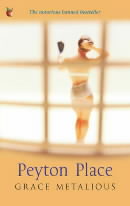
I keep trying to plug the gaps in my reading experience, catching up with books that are so famous that it is assumed that absolutely everyone has read them - and yet some how you never have. One such book is Peyton Place by Grace Metalious, which was written exactly 50 years ago. Because I was too young to read it when it was first published, and because I grew up in central Africa and had no TV and little access to cinema, I have never seen the film nor the TV series which sprang from the book, so I thought it was just a salacious American best seller of little literary merit. Earlier this year I heard an extract read on Radio 4, and decided that the time had come that I should read it for myself. To my surprise it turned out to be a much better book than I had expected, and a very absorbing read.

Peyton Place is the name of a small (fictitious) New England town in the years just before the Second World War It is a town which looks like the quintessential American community, as wholesome as apple pie, a town like thousands of others all over the USA. Metalious strips away the veneers of respectability to expose the secrets and lies of the inhabitants of Peyton Place.
The story of teenager Allison McKenzie and her mother Constance provide the framework of
the book. Constance has built a life based on a lie; everyone, including her daughter, thinks she is a young widow bringing up her daughter on her own. In reality, Allison is illegitimate and Constance is terrified of the reaction of others if they knew the truth, she is obsessive about protecting her daughter from making the same mistake as she made, and her controlling behaviour is driving a wedge between them. Surrounding Constance and Allison are the other characters who live in the town, and the reader is drawn in to their lives and stories. There is Kenny, the town drunk who goes on a massive six week bender and nearly kills himself; Selena, a girl of Allison’s age but from the wrong side of the tracks, who has been sexually abused and raped by her stepfather – eventually resulting in her pregnancy and an illegal abortion; Rodney Harrison, the spoilt son of the richest man in town who dies when he crashes the sports car given to him by his doting father; the local doctor, Dr Swain who manages to force Selena’s stepfather to leave Peyton Place by threatening to reveal his behaviour to the community. All the various strands are woven together to give the reader a sense of small-town prurience, predjudice and hypocrisy.

When it was first published in 1956, the book became an instant best seller; it touched a nerve in the American reading public, and sold 60,000 copies in the first ten days following publication, eclipsing Gone with the Wind. Peyton Place became a defining book, apart from the follow up novel written by Metalious herself (Return to Peyton Place), various other “sequels” have been written by other people, there was a Hollywood movie, and then a long running TV series. The blockbuster TV series of recent years, Desperate Housewives and Sex in the City are very much descendents of Peyton Place. Sadly, after the book was published Grace Metalious and her family were reviled by her neighbours and fellow citizens in the New England town where they lived. The stress caused by their continual shunning of her turned her to drink, and she died aged 39 of cirrhosis of the liver.


RANTING:

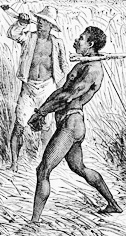
Yesterday Tony Blair made a statement of regret about the practice of slavery, which Britain abolished 200 years ago. Some black pressure groups felt that he should have apologised on behalf of the British people for the fact that slavery had taken place at all. What a load of rubbish, this is gesture politics at its most cynical.

If we all start apologising to one another for wrongs done by our ancestors there will be no end to it. The only person who can genuinely apologise for something, is the person who did the wrong. The people who initiated, enabled, or profited from slavery are long dead, we are living in different times. I am not responsible for slavery, I loathe the idea of slavery - I certainly have nothing to apologise for, and I resent the idea that our Prime Minister should even consider apologising on my behalf and that of my fellow citizens.

There seems to be a deep-seated belief within some sectors of the black population here and in the USA that any current troubles they may have are as a result of slavery hundreds of years ago, and they want financial compensation to be paid to the descendents of slaves. A distorted myth has grown up, which bears no relation to the true facts about slavery. Slavery was a horrible business, and it is a sad fact that the British engaged in it, but apologising will do nothing for anyone, we can’t go back in time. History marches on.

Slavery has existed for thousands of years, and in virtually every culture of humankind. The Chinese, Egyptian, Babylonians, Greeks, Romans, Persians, Goths, Arabs, and Ottomans have all bought, sold and used slaves. Ancient Britons were taken as slaves by Romans, and owned slaves in their turn. Slavery existed in Africa long before the British or other western nations went to Africa, and it is still going on today, albeit illegally. Some in Africa are still engaged in selling men, women and children into other societies. In South East Asia women and children are kept as virtual slaves to the sex trade. Young girls in Afghanistan and other central Asian countries are sold by their fathers to be “wives” to old men, and they then live lives that are tantamount to slavery. Rather than apologising we should all be doing our best to ensure that a stop is put to slavery as practiced in the world today.


RECIPE:

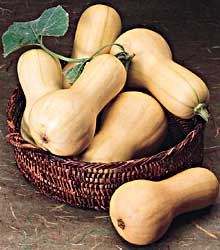
BUTTERNUT, BACON & FETA PASTA

Serves 4

1 Butternut Squash
1 Tablespoon Olive Oil

200g Feta, drained and cubed

1 clove garlic, crushed
50g Pine Nuts, toasted

1 teaspoon dried Oregano
8 rashers of smoked back bacon
350g Farfalle or Penne Pasta

Pre-heat oven to 200° C, Gas Mark 6.

Cut the Butternut in half, scoop out and discard the seeds.

Peel the squash and then cut the flesh into bite-sized chunks and place in a roasting tin.
Drizzle with the olive oil, stir in the garlic and oregano and season with freshly ground black pepper. Roast for 20-25 mins, stirring occasionally, until the squash is golden and tender when pierced with the tip of a sharp knife.

Pre-heat the grill to high, and cook the bacon for 4-5 mins until crisp, then cut into bite-sized pieces. Meanwhile, cook the pasta in a large pan of boiling water until al dente in the usual way, drain well and keep warm in the pan with a lid on.

Add the bacon and feta to the roasted squash and return to the oven for 2-3 mins until the cheese is beginning to soften and melt. Remove from the oven and stir in the drained pasta.

Serve immediately seasoned with freshly ground pepper and the toasted pine nuts scattered over the top.


Monday, August 07, 2006

Hey ho - another week begins. All the cliches I can think of about time flying spring to mind, but I am certain sure that time is speeding up. I'll probably need to borrow Cecil Rhodes's dying words for myself "So much to do, so little done".


READING:
I've been an avid member of Bookcrossing for almost four years now, and have found it a wonderful way of decluttering our bookshelves, discovering new authors, and meeting other fanatical readers. A good friend, KGJ, came round on Saturday with a big bag of paperbacks which she no longer wanted so that I could register and release them. It was a very mixed bag, but I picked up one of them and became totally hooked. An unlikely book for me to read, I would never have even picked it up in a bookshop or library, but as it was sitting here on my desk I was intrigued. What is the book? "Confessions of a Park Avenue Plastic Surgeon".
The book is written by a very well known cosmetic surgeon who works in both the USA and Britain. Some of the cases he describes are absolutely eye-popping - the things women have done to their bodies is extraordinary. Why on earth do women put themselves through so much pain, expense and physical danger just for vanity? I just find it difficult to put myself in their mind-set. The author Olivia Goldsmith who wrote "The First Wives Club" and ten other novels, often used cosmetic surgery as a theme in her writing. In her 1998 novel "Switcheroo" she wrote about a woman who tries to win back her philandering spouse by transforming herself into the spitting image of his younger mistress. Then Goldsmith herself succumbed to the dream that changing her external appearance would change how she felt about herself. She checked into one of Manhattan's top private clinics for a chin tuck and face lift. Being nervous of the op she chose to have a general anaesthetic and within four minutes went into a coma and died - for what? for a face lift. Plastic surgery is not for me. I am not disfigured in any way, and whilst not enamoured of the visible signs of ageing, they are normal and natural, and I don't want to kid myself and others that I am younger than I am.

RANT:

Why do manufacturers make plastic blister packaging so bleeping difficult to open ? This morning I tried to open a six pack of razor blades so that I could give one packet to my DH. I tried scissors, my teeth, a sharp pointy thing in the tool box and two different kitchen knives, receiving a nasty plastic cut in the process, before the beastly package finally yeilded.


RECIPE:
For years now Monday night has been pasta night in our house. It makes life so much easier when I don't have to think too hard about what is for supper. This is a wonderful pasta sauce recipe which I discovered when the kids were little, it is cheap, delicious, and any kids who refuse to eat vegetables get a good helping of carrots without realising they are doing so! I often make a double or triple quantity and freeze it.

SAUSAGE & CARROT PASTA SAUCE
Serves 8
500g good quality meaty sausages (Italian are good)
2 tablspns oil
30g butter
1 medium/large onion finely chopped
4 large carrots, grated
2 large tins peeled tomatoes, blended in the can
250ml stock (made with beef or chicken stock cubes)
1 heaped teaspn dried oregano
2 bay leaves
Salt + Pepper

Remove the skin from the sausages and break up the sausage meat. Heat the oil and butter together in a saucepan and cook the onion until translucent. Add the sausagemeat and lightly brown, using a wooden fork to break it up all the time. Add the grated carrots and stir for a few minutes. Add the tomatoes, stock, bay leaves and oregano and cook, covered for at least 30 minutes. Taste for seasoning.
This goes well with almost any pasta but is really best with penne.
When serving, sprinkle generously with grated parmesan.
The sauce freezes well for 3 months.