Showing posts with label cakes. Show all posts

Saturday, October 03, 2009

THERE ARE NEVER ENOUGH HOURS IN THE DAY & NEVER ENOUGH DAYS IN THE WEEK TO DO ALL THE THINGS I WANT TO DO.


READING:

Alone in Berlin
* by
Hans Fallada is the most remarkable book I have read for a long time, certainly the best book I have read this year. The author's real name was Rudolf Ditzen, and he wrote the book in 24 days and died just a few weeks before it was published in 1947. It has taken 62 years to get it published in English. Michael Hoffman the translator has done a magnificent job.

The novel is set in Berlin between 1940 and 1942-3. 55 Jablonski Strasse is an old-fashioned apartment block and the reader is introduced to various residents, the elderly retired Judge, old Frau Rosenthal whose husband was seized by the Gestapo a fortnight previously, the ghastly Persicke family who are Nazi toadies, Emil Borkhausen a petty criminal whose wife Evie has a sideline as a prostitute, and most importantly we meet Otto and Anna Quangel.


Otto is the foreman in a woodworking factory which made fine furniture in peacetime but now produces large crates for the German war effort. He and his wife Anna are self-contained, conservative and thrifty to the point of being miserly. Otto is fiercely private and independent and has so far managed to avoid joining the National Socialist party as he resents the fact that he would have to give a contribution from his wages to the Party coffers. This refusal has meant that he is regarded with suspicion, gets a lower wage and is passed over for promotion.

When Otto and Anna's only son Ottochen is killed fighting in France, they embark on a scheme of small scale domestic resistance to the regime. Otto starts producing anonymous postcards criticising the Nazi party, and they deposit these all over the city. The first of these postcards reads:
'Mother! The Fuhrer has murdered my son. Mother! The Fuhrer will murder your sons too, he will not stop till he has brought sorrow to every home in the world.'
Another reads:
'Pass this card on so that many people read it! - Don't give to the Winter Relief Fund! - work as slowly as you can! - Put sand in the machines! - every stroke of work not done will shorten the war!'
This is a perilous scheme, the postcards come to the attention of the Gestapo almost immediately, and one of their most successful officers, Inspector Escherich, is ordered to unearth the writer of the cards. Then a cat-and-mouse game begins between Escherich and the Hobgoblin , as he refers to the unknown postcard writer. Esterich has a big advantage in that of the 267 cards produced by the Quangels, all but 18 are handed in to the authorities straight away, so plotting where they have been dropped and thus where the writer might be based is fairly straightforward.
Whilst all this is going on, the other residents of the apartment building are surviving in the twisted world that is now German civilian life. Some are crushed by the regime, others rise as a result of having made dubious moral choices, and overshadowing everything is an all pervading fear of the SS, the Nazi party, and a lack of trust or faith in their fellow Berliners.

Eventually Inspector Escherich himself falls foul of the monstrous Gestapo, which is like some huge juggernaut being driven by a crazy drunkard.

Finally, inevitably, Otto and Anna meet their fate.


I found this book an emotionally exhausting read, but it is so well written that it is impossible to put it down once you have started reading it. By the end I was weeping.
Apparently Ditzen based the Quangels on a real-life couple, Otto and Elise Hample, who carried out just such a postcard campaign in Berlin in the early 1940s. Their lives stand as an example of how the common man can be obdurate in the facing of great evil even when it
will cost everything.

Primo Levi, who was a prisoner in Auschwitz, must have read this book in German when it was originally published for he called it "The greatest book ever written about German
resistance to the Nazis".
There are many, many books about World War Two, but nothing quite like this. It has such veracity, and made me ponder how I would have behaved in such circumstances. I think everyone should read it.

* In the USA the book title is Every Man dies Alone

Rated 5*


RANTING:

Cycling England, an organisation which is an off-shoot of the Department of Transport, has come up with the proposal that if there is an accident involving a bicycle and a motorised vehicle be it car, lorry or bus, the driver would be held legally responsible under civil law even if it was the cyclist who was the cause of the accident and they would be liable to pay compensation. If that happened the driver's insurance premium would go up which would be yet another penalty they would suffer when they might have done nothing wrong.
I think drivers will be up in arms when the reality of this plan sinks in.


My DD cycles everywhere (for several years she used to cycle back and forth across central London in the rush-hour, which certainly gave me some grey hairs) and her new husband cycles everywhere too, so I am very cautious about cyclists on the road when I am driving but I fail to see why, if I am obeying the highway code, observing the rules of the road and driving with due care and attention for all other road users, it should be presumed in law that I am to blame in any accident.

Apparently Denmark, Germany and the Netherlands have all adopted this type of legislation, and I would love to hear from anyone from those countries who can tell me how it works and how the public feel about it.
A few nights ago I was driving along a major road and through a big junction when a cyclist, dressed in dark clothing and with no bike lights whatsoever happily rode through the red traffic light and across my way. I slammed on the brakes, and missed hitting him by the skin of my teeth, and fortunately the woman in the car behind me managed to brake fast enough not to hit the back of my car, but it was a very close run thing. I confess that the language I used was not fit for public hearing. The stupid sod carried on his merry way either oblivious to, or uncaring that he had almost caused a three car pile up. Under this proposed legislation he
would get away scot free, whereas we drivers would have had a huge insurance imbroglio. In our increasingly litigatious culture this seems an open invitation for drivers to be sued for compensation by any of the crazy Lycra Louts who think they can do as they please on the highway just because they are on a bike

Cycling England seems to be putting out the message two wheels good, four wheels bad - which I resent.


RECIPE:


I was recently given the present of a recipe book from South Africa called Cakes to Celebrate Life and Love. It is entirely devoted to the most divine looking cakes and cupcakes, and I can feel myself gaining weight as I turn the pages. The other day I noticed that there were some bananas in the fruit bowl that were a
tad too ripe for my taste, but perfect for cooking with, so I got out the new book and lo and behold there was just the recipe I needed. It is one of those recipes where you bake the cake, and whilst it is in the oven you make a hot sauce, in this case butterscotch, and when the hot cake comes out of the oven you pour the sauce over it and it soaks in.

The quantities given make 2 cakes, so one went to the DD & SIL and the other lasted all of 12 hours as the DH and son decided to keep sampling it "Just to see if we prefer it to your old Banana bread recipe..." Oh yes?
It is a lovely moist cake, and I think it would keep well if you stood guard over it!


BUTTERSCOTCH BANANA CAKE

3 eggs

400g sugar
330ml corn oil
3 ripe bananas, mashed
80ml buttermilk (or use sour cream)
1 Tablespoon vanilla essence
420g plain flour
1 teaspoon Baking Powder
Pinch of salt
30g dessicated coconut
60g walnut pieces roughly chopped (plus a few extra for the top)

Pre-heat oven to 180°C. Grease and base line two medium sized loaf tins (approx 2kg size).
In a large bowl whisk together the eggs, sugar, oil, mashed bananas, buttermilk and vanilla. Sift the flour, baking powder and salt into another bowl. Add this to the banana mixture, beat together and stir in the coconut and walnut pieces. Pour the batter into the two prepared tins and bake in the centre of the oven for 40-50 minutes or until a skewer comes out clean. Whilst the cakes are baking prepare the butterscotch sauce.

100g soft light brown sugar
70g butter - preferably unsalted

60ml cream


Place all ingredients in a small saucepan and heat gently whilst stirring until all the sugar has dissolved and the mixture is bubbling. Let it boil for a moment or two and then remove from the heat. When the cakes are done, take them out of the oven and pierce them all over with a skewer, then pour the hot butterscotch sauce over them and leave to cool in the tins.


Friday, July 25, 2008


"I KNOW THE HUMAN BEING AND FISH CAN COEXIST PEACEFULLY"
George W. Bush (had anyone suggested that they couldn't?)


READING:

Last week I celebrated my birthday (no, I am not going to tell you which one, but it wasn’t a decade or particularly significant, but it is in double figures) and I was given some wonderful books as birthday gifts.

Among these was The Bolter by Frances Osborne, which is a biography of her great-grandmother Lady Idina Sackville.

Idina Sackville was born in 1893 to very rich aristocratic parents. Whilst still a child her father, the 8th Earl De La Ware (after whose family the city of Delaware in the USA is named) ran off with a can-can dancer (or two) and his independently wealthy wife took the extraordinary step of divorcing him. In Victorian society divorces were rare and very much disapproved of. This in part seems to have started the pattern for Idina’s own life, as she married and divorced no less than five times, and had innumerable lovers, before during and after her marriages. She scandalised 1920’s society, was estranged from her three children, and was the inspiration for Nancy Mitford’s character ‘the Bolter’ in ‘The Pursuit of Love’.

It is hard to comprehend just how laissez-faire upper-class sexual morals were, provided one was married, as the pictures we see of the men and women of the time are very starchy and proper. But Idina’s behaviour went way beyond the accepted norm, and at the end of the First World War, when her first husband Euan Wallace (the author’s grandfather) divorced her; she set off with husband number two – leaving her two small sons behind -

to make a new life farming in British East Africa, soon to be re-named Kenya. Of course, she didn’t really make a ‘new’ life, but continued as before, having affairs with other men, and after only two or three years, getting divorced again and returning to England. There she met the 21 year old Josslyn Hay, grandson of the Earl of Erroll, and despite the difference in their ages – she was nine years his senior – married him and swept off to Kenya once more. There they bought a farm and built a house, and both of them began to have affairs with all and sundry. Here she had her third child, a daughter, about whose parentage there were many rumours. This marriage also ended in divorce, and yet again Idina returned to England where she met and married husband number four, a very wealthy American, to whom, despite resuming her usual behaviour with other men, she managed to remain married to for eight years – a record for Idina!

Idina was the lynchpin of the so called ‘Happy Valley’ set whose bed-hopping, wife-swapping behaviour in Kenya gave rise to the joke doing the rounds in upper-crust English society “Are you married, or do you live in Kenya?”. Happy Valley came to international prominence in 1941 when Idina’s third ex-husband and father of her daughter, Jossyln Earl of Erroll, was found shot dead in his car and the husband of his current mistress, Sir Jock Delves Broughton was tried for the murder. The whole scandal, and the lives of the Happy Valley set were documented in the book ‘White Mischief’ by James Fox, which was later turned into a box-office success starring Greta Sciacci. In fact Idina was portrayed in several films, the most notable being when Greta Garbo played the character based on her in ‘A Woman of Affairs’.

Selfish, sexually voracious and dissolute, Idina comes across as a thoroughly unpleasant woman, even though she must have had a great deal of charisma. Far from being committed to a life in Africa, she treated it as her personal playground, and other people and her own children as toys which could be dispensed with when she didn’t want them any more. She appeared to lack any concept of loyalty or duty.

Latterly she tried to establish contact with her by now adult children, but this was only partially successful. Indeed the author’s own mother – Idina’s granddaughter – deliberately blanked her out of the family history until a newspaper article made it necessary for her to tell her own children who Idina was.

As a slice of social history and as the portrait of completely amoral woman, The Bolter makes eye-popping reading.

Rated 4*


RANTING:

There is a new craze slowly beginning here in the UK (and in Germany too) if the press is to be believed, it is the Cuddle Party. These are events which have a ‘facilitator’, which you pay to attend (£30 is the going rate in London I’m informed), and which is:

“A structured, safe workshop on boundaries, communication, intimacy and affection. A drug and alcohol-free way to meet fascinating people in a relaxing environment. A laboratory where you can experiment with what makes you feel safe and feel good.”

Yep, you pay money to meet a bunch of strangers and cuddle them. Bletch!!! What a weird, creepy idea.

This ‘concept’ was dreamed up by two Californians – need I say more?

Not that I think all Californians are doolally, I’m just saying that some Californian practices seem rather off-the-wall to non-Californians.

If any of my family and friends read this, and feel that they are in need of a cuddle, come right on over and I’ll give you one for free – with a glass of wine or a Gin & Tonic thrown in as a bonus.

RECIPE:
Cherries are one of my top ten favourite fruits, but most of the cherries sold in the UK come from Turkey, France or the USA, and though they are delicious it is a great shame because England used to have some of the best cherry orchards in the world. There is a move to try and get more English cherries into the supermarkets and greengrocers, and if you want to save the wonderful varieties of English cherry click on CherryAid. As last Saturday was National Cherry Day, I decided to do my bit by buying some English cherries and making a cake.

CHERRY UPSIDE DOWN CAKE

Serves 6-8

500g cherries (stoned)
150g soft brown sugar
75g butter
3 large eggs, lightly beaten together
150g self-raising flour
½ teaspoon vanilla extract

Pre-heat oven to 180°C

Butter and flour a 20cm cake tin, and line the base with baking parchment.
Arrange the cherries over the bottom of the tin, and sprinkle 50g of the sugar over them.
Beat the butter and remaining sugar together until pale and fluffy then add some of the egg, beating it in well before adding some of the flour and more egg and continue beating. Add the remaining flour and egg alternately beating each addition in well before adding the next; add the vanilla essence with the last addition of egg.
Pour the cake mixture over the cherries and sugar, and smooth it level with a spatula if necessary.
Bake in oven for 25-30 minutes until risen and golden and just beginning to come away from the sides of the tin. It may not need quite as long if it is in a fan oven.
Remove from the oven and allow to cool for a couple of minutes.
Place a large serving plate over the tin, and carefully invert it.

Serve warm or at room temperature with crème fraiche or with whipped cream.

Wednesday, February 28, 2007

USE IT UP, WEAR IT OUT, MAKE IT DO, OR DO WITHOUT... I'm tightening my belt in March.


READING:
You and I ,
dear blog reader, are very fortunate, we have our sight so we are able to read the printed word - indeed you are reading this post. In the past three years I have had some serious problems with my left eye resulting in several operations which have saved my sight and for that I am very, very grateful. To be unable to read is one of the things I most dread, so when I came upon this piece written on Dovegreyreader's blog it went straight to my heart:

My name is Clare Gailans. I am totally blind and have used braille as my means of literacy since starting school at five, that's to say for over 40 years. I have always told people what a wonderful system braille is, and had imagined it would always be offered to those who need to use it to read. Technology makes it very much quicker to produce now, and the Disability Discrimination Act requires information to be produced in it if it is the most appropriate format for the recipient.
This is all very well for us adults, but it is becoming clear that shortages of qualified personnel, money, or perhaps just plain arrogance, are creating a situation in many mainstream schools where blind children are not taught braille, and those with useful sight are often denied it until their sight has further deteriorated. By this time many of them already hate reading, which is a huge extra strain on them throughout the school day - a stressful time for many children at the best of times.
Apart from the people close to me, books are my first love and I came to them through braille. Books can be listened to with enjoyment, but this is not literacy. I could not have enjoyed sharing my love of books with others through email, or made virtual friends with so many lovers of books such as Lynne, without being able to write, spell and punctuate. Listening to voices as a poor second to literacy would not have taught me these things.
Without first learning to read words I could not have mastered music through braille notation, which has been the key to my employment for the past 25 years, and my obtaining a degree in music from Cambridge before that. Braille has also been the difference for my husband and me, through such activities as music and chess, between being merely tolerated in the sighted community and being fully accepted, indeed sometimes looked up to, for our contributions.
It has helped me in a variety of voluntary activities, and to instil a love of reading in our two sighted children. I could not run our household efficiently witout it, in every department from cooking to labelling the many reams of paper which have to be filed, and which without braille would all feel identical."
There is an online petitionto ask the government to make the teaching of braille available for all blind and partially sighted people which I have signed - it can be signed by any UK citizens and I sincerely hope you will consider doing so. As tomorrow is World Book Day it seemed particularly appropriate to consider how much the ability to read means to me, rather than to talk about a particular book.


RANTING:
No music on a summers evening at Kenwood this year. Well I can’t say I mind too much, over the past few years the summer concerts have become just big noisy overblown events that we no longer attend.

For 55 years there have been outdoor musical concerts by the lake at Kenwood House, a beautiful neo-classical house on the northern slopes of Hampstead Heath in north London. As we live fairly close by, my DH and I, our children, friends and neighbours used to go to one or two concerts each season; we’d pack a picnic, several bottles of wine, some rugs, cushions, and black bin liners (in case the weather turned wet) and troop off to lie on the grass with other north Londoners and enjoy the music which was always of a very high standard. One or two of the concerts each year would end with a firework display.

Then, some years ago, English Heritage took over the management of Kenwood House and its grounds. Tents selling various overpriced drinks started appearing on either side of the grassy slope where most people sat and picnicked. The ticket prices went up steeply. The concerts started to have fireworks more frequently. From being concerts of classical or chamber music with the occasional foray into opera or jazz, they became more populist. Last season had, amongst other delights, Art Garfunkel and His Band, Sinatra Under The Stars, The Time of Your Life – The Music of Dirty Dancing, The Four Seasons, Dancing in the Streets - The Music of Motown. Corporate Hospitality tents sprang up to enable businesses to entertain their clients at the concerts. As if that were not enough, the concerts started being advertised very widely, and coach loads of visitors came from as far afield as Guildford and Milton Keynes. In the past few years English Heritage has been selling 10,000 tickets for every concert. Ten thousand people at Kenwood – it was getting ridiculous - far, far too many; they usually came by car, and the streets on all sides of the Heath were clogged with traffic and people trying to park. To match the expectations of audiences paying the higher ticket prices, and coming from far and wide, the music started to be amplified with special hi-tech equipment, so that it could be heard by everyone who lived in the vicinity and some distance away too. Local residents finally had enough and complaints to the local council started to snowball. Finally, Camden Council have ruled that they will only grant English Heritage a license for eight concerts this year, not ten, and they must cut the ticket numbers to 8,000 per concert. English Heritage grumpily says that is not economically viable, so they will not put on any concerts at all.

They have killed what used to be a wonderful summer tradition through sheer greed.


RECIPE:
Who says you can’t teach an old ‘dog’ new tricks? A dear friend was celebrating his 60th last weekend, and I was asked to make the birthday cake – specifically a carrot cake. Well, I have made more carrot cakes than I’ve had hot…well, maybe not QUITE that many, but a fair few over the years. I have always used the same tried and trusted carrot cake recipe and I’ve never had any complaints. However, for some perverse reason I decided to abandon my usual recipe and instead to use the recipe I'd read on another blog. Some months ago, Reluctant Nomad posted his carrot cake recipe on his blog, and so I tried it out. All I can say is, it is the BEST. When you read through it, it seems much like any other carrot cake recipe in terms of ingredients etc, but somehow it turns out to be the Űber Carrot Cake of all time. Which is a long-winded way of saying that I am not posting a carrot cake recipe, click on the side bar link to find Reluctant Nomad's blog and check his archive for November 7th 2006 to find his recipe.
But I am posting a recipe for the icing which a birthday cake demands!

CREAM CHEESE ICING

175g cream cheese
175g softened butter
250g icing sugar (sieved)
½ teaspoon vanilla essence

Put all the ingredients into a bowl or food processor and beat/whiz together until smooth and creamy.
Spread over the top of the cake - et voila!


Monday, November 20, 2006

DON'T COME TOO CLOSE, I'm absolutely streaming with cold and I wouldn't want you to get it. Honest to goodness, if they can put a man on the moon and invent the iPod shuffle you'd think some bright spark would have got the common cold under control by now.


READING:

How to waste an hour and a half looking something up.

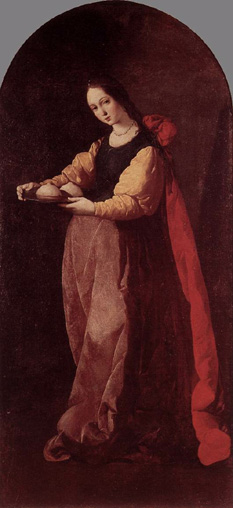
Like many other people I love almanacs, encyclopaedias and other reference books of that ilk. Yesterday I came across a classical reference in a novel I’m reading. Now I did do Latin until I was about 12, and have read (many moons ago) the Greek myths, but this was not a name that was familiar to me – Pylades – do you know who he/she is? Anyway, when I was having a mug of coffee at my desk, I thought I’d just look him/her up in my copy of Brewer’s Dictionary of Phrase and Fable. Big mistake, nearly two hours later I was still browsing through Brewer’s. First I found Pylades, turns out he was bosom friend of Orestes, so they hung out together like David and Jonathan; while I was at it, I thought I’d look up Eagle stones, which lead me to Aetites and then on the next page I spotted St Agatha –the patron saint of volcanoes, and who is depicted in paintings holding a platter with her severed breasts on it. This reminded me of a little Italian village we once visited, called St Agata Due Golfi which is just south of Vesuvius. My DH and I once had a fabulous dinner there at a restaurant called Don Alfonso 1890, which has 3 Michelin stars, and the bill nearly broke the bank.

Then I thought I would quickly look to see what Brewer said about Dick Whittington, because on Highgate Hill (which is nearby), he and his cat heard Bow Bells tell him to turn again – but there was nothing I didn’t already know. Then I started opening the book randomly, and discovered all sorts of fascinating titbits – the name of the Man Who Broke the Bank at Monte Carlo (Joseph Hobson Jagger); the smallest pig in a litter of piglets will reputedly follow its owner anywhere, and is known as a Tantony Pig, and a Wapentake is a subdivision of a county similar to the Hundreds or Ridings. Anyway, when the phone rang I suddenly realised how much time had passed and how totally absorbed I had become, what was I thinking of…and on a Monday morning too.

Every home should have a copy of Brewer’s Dictionary; it is an essential household requirement for settling arguments, solving crossword clues and general time wasting.

RANTING:

Time for another rant at the ludicrous use of Health & Safety legislation in this country.

Those of you who have or have had children may know of a famous fictional character called Postman Pat. A cheery chappie, he delivers the mail by driving his little red post van around country lanes, accompanied by his black and white cat Jess. There was a TV series, books, tapes and other toys based on Postman Pat, he is loved by thousands of British children.

For the last six years, a mechanised, coin-operated Postman Pat Post van ride has stood in a shopping precinct in Market Harborough. You know the kind of thing. Your 3 year old sits in the little rocket, car, train or whatever, you pop some coins in the slot, and the machine rocks gently back and forth. It is a welcome distraction when shopping with a young child.

Now the owners of St Mary’s Place Shopping Precinct have said it must go. A spokesman for St Mary's Place said it was targeting "material outside shop boundaries with health and safety implications." Not because the ride itself is considered dangerous – rides already have to comply with stringent H&S guidelines regarding manufacture and maintenance. No, they think it might be a H&S risk for pedestrians. The fact that this particular ride has stood in the same position outside a particular shop for the past six years without one single person walking into it or tripping over it, (in fact there has never been any man, woman or child involved in any sort of incident with the ride) would seem to contradict their views.

So why this sudden anxiety? Well, one of two reasons I suspect. Either the local council’s Health & Safety gaulieters have decided to justify their jobs by scratching around for something to have a go at, and have been all over the owners of St Mary’s Place like a rash OR the owners of St Mary’s Place want some more money from the shop owner who owns the ride, and this is part of a softening up process to get it. Or maybe it’s a bit of both. Whichever it is, Health & Safety is again being cited as the reason. Soon we’ll be fined if we don’t tie our shoelaces to their satisfaction.

Welcome to the house of fun.


RECIPE:

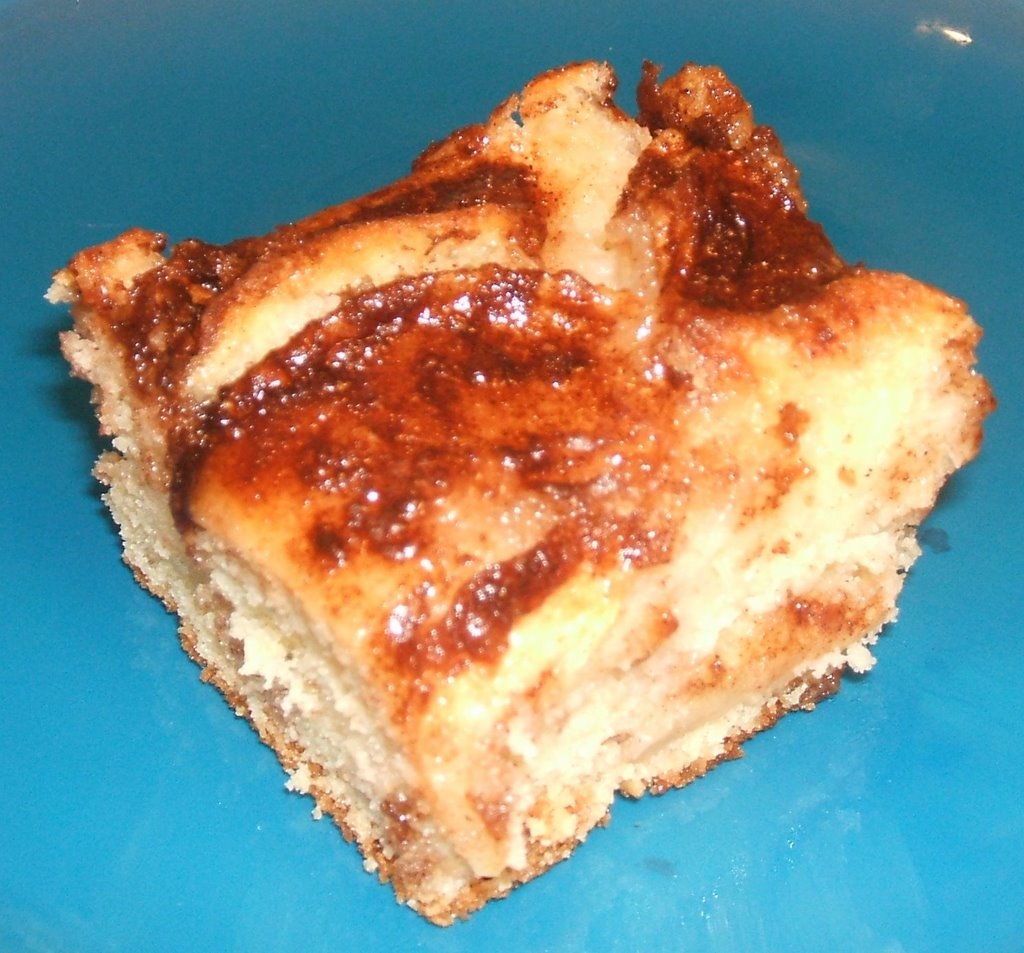
How to satisfy a craving for something sweet to eat when there isn't a biscuit in the house, you havn't been to the shops yet and the fruit bowl only contains two rather elderly cooking apples...throw together this little number, it takes no time at all, and hey presto, sweet craving satisfied.

DUTCH APPLE CAKE

170g self-raising flour
1 large egg

1 teaspoon baking powder
85g caster sugar
6 tablespoons milk

28g melted butter (do this in the microwave)

For the topping

28g melted butter
85g caster sugar
1 level teaspoon cinnamon
500g cooking apples

Pre-heat oven to 200°C

Line rectangular baking tin (28 cms x 18cms) with baking paper.
Sift flour, baking powder together into a bowl, add the sugar and stir in.
In a jug mix the egg, milk and melted butter together.
Mix the sugar and cinnamon for the topping together in a small bowl.
Peel and core and quarter the apples, and cut into slices.
Pour the egg mixture into the flour and using a wooden spoon mix well to form a stiff batter.
Spoon the batter into the prepared tin and spread it evenly – it will seem a very thin layer.
Brush the batter with the melted butter for the topping and then arrange the apple slices neatly over the surface in overlapping rows.
Finally, sprinkle the mixed sugar and cinnamon evenly all over the apple slices.

Bake for approximately 30mins until risen and golden.

Cool, and then cut into squares.


Saturday, November 11, 2006

TODAY IS ARMISTICE DAY, and at 11am I kept the two minute silence, while standing alone in our kitchen. I thought of my Great Grandmother who lost two sons in the First World War, and of my own paternal Grandfather, who was shipwrecked in January 1916. On a life raft with two other men, he was the sole survivor after being adrift for three days in the North Sea.


READING:
Thousands of books have been written about war, remembering war, set in a war. As it is Armistice Day I thought, that rather than blog about what I am reading at the moment, I would list some of the books I have read over the years which deal with war and conflict.

WW1:

All Quiet on the Western Front by Erich Maria Remarque
Goodbye to All That by Robert Graves
Birdsong by Sebastian Faulks
A Farewell to Arms by Ernest Hemingway
The Good Soldier Schweik
by Jaroslav Hašek
August 1914 by Alexandr Solzhenitsyn
And Quiet Flows the Don by M. A. Sholokov

Spanish Civil War:

For Whom the Bell Tolls by Ernest Hemingway

WW2:

The Tenth Man by Graham Greene
Most Secret by Neville Shute
The Bridge over the River Kwai by Pierre Boulle

When Hitler Stole Pink Rabbit by Judith Kerr
The Guns of Navarone by Alistair McLean
Catch 22 by Joseph Heller
The Cruel Sea by Nicholas Monserrat
That Summer by Andrew Greig
The Empire of the Sun by J.G. Ballard
The Seige by Helen Dunmore
How Sleep the Brave by H.E. Bates
Enigma by Robert Harris

The Gulf War:

Bravo Two Zero by Andy McNabb


RANTING:


IN FLANDERS FIELDS the poppies blow
Between the crosses row on row,
That mark our place; and in the sky
The larks, still bravely singing, fly
Scarce heard amid the guns below.

We are the Dead. Short days ago
We lived, felt dawn, saw sunset glow,
Loved and were loved, and now we lie
In Flanders fields.

Take up our quarrel with the foe:
To you from failing hands we throw

The torch; be yours to hold it high.

If ye break faith with us who die

We shall not sleep, though poppies grow

In Flanders fields.


Yet again a group of PC people are trying to get people to stop wearing red poppies as a sign of remembrance, It makes me livid.
Poppies have been a symbol of death and sleep since the time of the ancient Greeks so it is entirely appropriate that they have become synonymous with remembrance of all the servicemen and women who died in the First World War and all subsequent wars. The poppies are red. They are red because they are a certain type of poppy – popaver rhoeas – which grows naturally in conditions of disturbed earth, and can be found growing all over Western Europe. During the Napoleonic wars of the early 19th century battlefields became fields of blood red poppies growing up around the bodies of fallen soldiers. During the First World War which raged through northern France and Belgium, the heavy shelling and trench warfare ripped open the landscape, and once again large numbers of poppies began to appear. None of them were white.

From time to time some group, or person, tries to say that we should be wearing white poppies for peace. This seems to imply that those who wear red poppies are against peace and are glorifying war. They seem to think they have commanded the moral high ground. What offensive, patronizing rubbish. To wear a poppy does not say that the wearer is either for or against war, just that they remember those who have died in war. In fact I can’t imagine that anyone in their right mind would be in favour of war per se. War brings fear, danger, cruelty, death, destruction and poverty in its wake; The price paid by individuals and families is often very high. To remember the dead, and to honour them, is to remind oneself that as nations we should be extremely wary of threatening , declaring or initiating war, or of becoming embroiled in other people’s wars, If there is a way of maintaining peace that is honourable, just and equitable we should always espouse it.

I , like millions of my fellow citizens, am entirely opposed to this bloody business in Iraq, and am equally opposed to our position in Afghanistan, but nonetheless I will be wearing my poppy and remembering that men and women are dying in war, yet again.

As someone wrote today -"The money from red poppies goes to help ex-servicemen; the money from white poppies goes to subsidise people spouting their opinions. "


RECIPE:

Whilst reading the controversy about poppies in the press , wearing a poppy myself, and writing my rather mild little rant above, I suddenly remembered a recipe for muffins I have made a few times and it seemed appropriate to post it here today. They are yummy when still warm accompanied by a mug of really good coffee. Enjoy!

LEMON POPPY SEED MUFFINS

Makes approx 1 dozen

280g plain flour
15 ml baking powder
1/2 teaspoon salt
200g caster sugar
1 egg
240 ml milk
1 teaspoon finely grated lemon rind
90 ml vegetable oil OR 85 g butter, melted
2 tablespoons lemon juice
2 tablespoons poppy seeds

Preheat oven 190°C

Line a 12 hole muffin tin with paper muffin cases.

In a large bowl, sift together the flour, baking powder and salt.
Stir in the sugar and poppy seeds.
In a separate bowl, beat egg with a fork. Stir in milk,
followed by grated lemon rind and oil/butter.
Add lemon juice.
Pour all of liquid ingredients into dry mixture. Stir just until
combined. Batter will be lumpy but no dry flour should be visible.

Spoon into muffin cases – they should be ¾ full.

Bake for 20-25 minutes, until tops are
lightly browned and spring back when pressed gently.

If you want to make them extra special and very lemony, you can mix 3 tablespoons of icing sugar with one tablespoon lemon juice to make a glaze, and drizzle it over the tops of the muffins whilst they are still hot.
Cool on rack before serving

Thursday, October 12, 2006

I'M FINDING IT DIFFICULT to convey the tone of voice I want in this blog, particularly when I am ranting, I can't seem to just let rip. I've been studying other rants in the blogosphere to see if I can gain some insights, and I 've stumbled across some real scorchers - try THIS to get an idea of what I mean - not that I want to emulate that particular style mind you, and it's not a subject I really have any strong views on either, but that is a rant in every sense of the word. Oh well, you'll just have to put up with me stumbling along until I find my true voice.

READING:


Ten years ago I read and enjoyed John Berendt's Midnight in the Garden of Good & Evil, so when I found a copy of his long awaited second book on my bedside when staying up in Fife last week I was really delighted; and
fromthe moment I started reading The City of Falling Angels I was hooked. It was all I could do to stop myself booking a plane ticket and departing for Venice there and then. Many, many books have been written about Venice (or are set in Venice), travelogues, serious tomes on Venitian art and architecture, history, as well as crime, romantic and literary fiction. Berendt has written about Venice from a very different perspective. He writes -with a light, slightly gossipy style- about the Venetians, and through them the reader gets a wonderful portrait of this magical city at the beginning of the 21stC. He has used the burning of La Fenice , Venice's famous opera theatre, the criminal investigations which followed the fire, the convoluted machinations between various groups to get the theatre rebuilt, and the rebuilding itself, as the backbone of his book. Woven around that strand are encounters with an amazing cast of characters, The Rat Man, Count Volpi, Olga Rudge (Ezra Pound's widow, the feuding brothers, and any number of Contessas and Marcheses, not to mention the various English and American expats who have made Venice their home. His descriptions are so vivid that you can smell the damp, the hot chocolate at Florians, the seafood and the sewers. You can see the hoards of tourists who are the life-blood of the Venetian economy and paradoxically are destroying the city by their very numbers. You watch with amazed amusement as the various "Save" Venice organisations jockey for pre-eminance and prestige. This is a wonderful book, and I had to keep reminding myself that it is Non-Fiction, and that ALL the characters are real people and use their real names. If you are going to visit Venice for the first time, read this book; if you already know and love Venice, read this book; if you are an armchair traveller, read this book. You WILL enjoy it!


RANTING:

What is the latest and most desirable fashion accessory for women who must have it all?

A Birkin handbag by Hermes (a mere snip at $50,000)? Or a whopping big diamond ring?

No - it is a cute little black baby from an impoverished African country.

Conspicuous compassion is all the rage, Angelina Jolie does it, and now Madonna has just picked up a toddler from Malawi – from 12 little boys from around the country who were brought together so she could make her selection. Not unlike choosing a handbag, or a puppy.

Malawi has a law preventing out of country adoption of children, but faced with the opportunity of having a wealthy western pop star giving a large amount of money to an orphanage in the country they have speedily changed things so that she can adopt this baby boy. Of course if you or I were to go to Malawi and attempt to adopt a child, the situation would be quite, quite different. Why is that? because we wouldn’t have that sort of money. In effect, Madonna is buying this child, like buying a handbag, or a puppy.

Let’s think about the orphanage she is having built, will it be run by the Malawians according to their cultural beliefs and norms? or by one of the many NGOs who have laboured long and hard against poverty, disease and deprivation in central Africa? No, it will be run in accordance with Kabbalah beliefs and thinking with staff selected, appointed and paid by them. The same whacky group of Kabbalah adherents that Madonna has joined in recent years. Yes folks, the same group of believers who got her lobbying our government to clean up nuclear waste by using Kabbalah water - you don’t believe me? This article from The Sunday Times will explain all.

As far as this particular child is concerned, yes, Madonna and her husband are wealthy enough to support him; they may also be emotionally determined to love him, warts and all, for the rest of his life. All well and good, but why do it at all – she has no links to Malawi, she already has children, she has not stumbled on a child in immenant danger of death and saved him; she has decided to make a gesture, and the spin off is she will look caring and compassionate – ahh.

However that may not necessarily be what is best for this child. He will be with a family who are racially, culturally and economically far removed from his own. Where will he feel he belongs? He will never fit back in to his own community in Malawi again, nor will he ever be totally grounded in which ever country Madonna decides to keep him – rootless for ever. When in Family Court, a plan for the care of a child is being considered, we have to work through a welfare checklist and take account of many, many factors to determine what may be in the child’s best interests. It is not easy to get right, and very easy to get wrong. To whisk in to a foreign country accompanied by a huge entourage, spend 10 days there, and whisk out again with a baby tucked under the arm is terrible. This is a human being for god’s sake, not a handbag or a puppy.


RECIPE:
I am not a particularly frugal person, in fact my DH is always yelling at me to switch lights off, but I do hate to waste food in the kitchen. So what do you do when you have some bananas which have all become over-ripe simultaneously? (silly me, I put them in a fruit bowl with apples) I like my bananas verging on the greenish side, so the only way to use them up before they become totally vrot is to make something with them. This recipe was originally from The Times Calendar Cookbook by Katie Stewart, and when the kids were at primary school and took packed lunches, I used to make it regularly. In fact, like many of my family recipes, I used to make a double or treble quantity and freeze the extra loaf. [BTW a treble quantity will fill 2x medium (20x12x8cm) loaf tins.]

BANANA NUT LOAF


Pre-heat oven to 180°C

Grease and base line a small (18x10x5cm) loaf tin

175g self-raising flour

½ level teaspoon salt

1 level teaspoon mixed spice

100g castor sugar

50g chopped walnuts

2 medium sized ripe bananas

1 large egg

25g melted butter

Sift flour, salt, and mixed spice into a bowl. Stir in the sugar and walnuts. Peel the bananas and mash to a purée with a fork. Add to the dry ingredients along with the egg and melted butter. Using a wooden spoon stir to blend the ingredients and then beat thoroughly to mix.

Spoon the mixture into the prepared loaf tin. Spread the mixture evenly – make a slight indentation in the center to compensate for the rising process. Place the tin in the center of the pre-heated moderate oven and bake for 1 hour. Turn out on to a rack and leave until cold. Keeps well for several days in an airtight container. Freezes well.

Serve sliced and buttered.


Saturday, September 09, 2006

BLOGGERS seem to be a very mixed bunch.
I have been strolling through the Blogosphere reading a huge variety of blogs, (and thats just the ones written in English).
I have a list of favourites that I have been reading for ages, and I would like to put a list of them on my sidebar, but so far I havn't quite figured out how to do that. One thing seems evident, 99% of bloggers are at least 10 years my junior.


READING:

I have heard some people say “I never read fiction” in a disparaging tone, as though novels were akin to comics, and that only reading non-fiction made them intellectually superior in some way.

How foolish and snobbish they are, they miss so much, and this book, given to me by my Australian cousin is a prime example.

I LOVE reading novels, and The Secret River is a really powerful, beautifully written book which is probably destined to become an Australian classic, and may even win the Booker prize this year as it is on the long list. Kate Grenville wrote this book after researching her family history and what a story she tells of the early settlement of New South Wales, based on one of her own ancestors.

The main protagonist is Will Thornhill, a cockney lad, born into a life of poverty and crime in late 18th Century London. Bobbing and weaving, ducking and diving, he learns to survive and becomes a waterman on the River Thames, marries his childhood sweetheart Sal, and is on the way to becoming respectable. An unfortunate turn of events throws him back into poverty and he ends up being transported to Botany Bay for an attempted theft. His wife and young child are able to go too, and they arrive in a new world, so harsh, so brutal, and so remote from everything they have ever known that they might as well have been sent to the far side of the moon.

After he has been emancipated Will, Sal and their children settle on a remote tract of land beside the Hawkesbury River some fifty miles north of Sydney and only accessible by boat.

Will is absolutely in love with the land, and realises that even though he is now a free man he would still be regarded as a criminal if the family returned to England although that is Sal’s abiding dream. Their struggles to clear the land and survive are set against their encounters with the local aboriginal people who roam through the area, and have no concept of ownership of land or growing of crops. Will and the other settlers cannot understand them or their way of life, and have no means of communicating. Clashes continually occur eventually culminating in an incident of such brutality that the aborigines are driven away from the area. However this incident changes Will, who is confused within himself as to how he, a decent man at heart, could have participated in something so horrible. None the less, from then on the family prosper, Sal comes to terms with the fact that they will never return to London, and that their future and their descendants future lies in this new land.

The book made me think of the parallels with the settlement of Southern Africa, and left me with many questions, particularly about how very quickly the indigenous people were subjugated. I am going to have to find other books to read about this early period of Australia’s history.


RANT
ING:

I don’t smoke any more – I gave up 25+ years ago when my daughter was born. I started smoking when I was about 20 (shared a flat with a friend who smoked like a chimney and got sucked into the chimney myself) and gave up when I was 30. My dear husband has never smoked (what a sensible, goody-goody, smug b*****d he is). I now loathe the whole idea of smoking; I loathe the way the smell clings - to clothes, curtains and in rooms. I don’t like the breath of smokers, and I would hate to sit in a smoky pub or restaurant now. BUT…

I loathe the idea that the state can force people to do things because the state thinks they are good for people. We should all be able to go to hell in our own way.

I particularly loathe the suggestion that we non-smokers should phone a free hot-line and denounce any smokers we may see in a public place.

Is the government lead by a bunch of totalitarian fascists? Do they want us to turn into the Stasi, informing on one another for any perceived misdemeanour? What will happen if the proposed 0800 number comes into use next year as planned, will there be cases of spiteful colleagues and neighbours phoning in to shaft someone? During WW2 in occupied France, many French citizens denounced others to the Germans in an attempt to ingratiate themselves with the occupying power. The British have always been particularly self-congratulatory that such behaviour would “never happen here”. What a load of bollocks, of course it would, and this situation with smokers will prove it. We have had a hosepipe ban in southern England for the past few months, and in the first two months, in Sussex, over 1500 suburban spies rang in to the hot-line to shop people.

You can be sure that there will be plenty of self-righteous folk who will do the same for the poor saps who are addicted to nicotine.

What will happen? Some poor bloke is sitting outside a pub on a sunny Sunday morning enjoying a pint and a ciggie, when nee-nah, nee-nah, the Smoking Gestapo will arrive and carry him off.

Why can’t some pubs, restaurants, cafes etc choose to be smoking venues and advertise themselves as such? Then we non-smokers can avoid them, and the die-hards can puff away in peace


RECIPE:

We seem to be having a last burst of warm summer weather this weekend, so what could be nicer than having tea in the garden - and of course afternoon tea wouldn't be afternoon tea without a cake. As we are rushing around trying to get the bathroom tiling completed there is not much time for baking, so I have made my default cake, a Victoria Sponge with cream and jam. In this case the jam is Mulberry & Apple, made by my friend A who is a dab-hand at jam-making.

VICTORIA SPONGE CAKE

115g soft baking margarine (I use Stork)

115g caster sugar

115g self-raising flour

2 large eggs

1 teaspoon (5ml) baking powder

¼ teaspoon vanilla essence

Jam and 125ml double cream

Pre-heat oven to 180°C

Grease and base line two 18cm sandwich cake tins

Make sure all ingredients are at room temperature.

Sieve the flour and baking powder into a mixing bowl, then add the sugar, soft margarine, eggs and vanilla essence.

Beat well together for two minutes until thick and creamy, if too thick add a tablespoon of milk.

Divide the mixture between the two tins, use a spatula to spread it out to the edges being thinner in the middle so it rises evenly. Tap each tin on work surface before placing in the oven.

Bake for 25-30 minutes, until golden brown, springy to the touch, and pulling away from the sides of the tin.

Cool in the tins for a couple of minutes, then turn out to cool on a wire rack.

When cool, sandwich together with jam and whipped cream or with whipped cream to which a little chopped fruit has been added such as strawberries, pineapple, or passion fruit pulp.

Dust the top of the cake with icing or caster sugar.

Freezes well either filled or plain (if freezing plain, separate layers with greaseproof paper to prevent them sticking together).